
Spoiler warning: This article covers major plot details from House of the Dragon season 3, episode 3, “The Queen Who Ever Was” era of the story. If you’re not caught up, turn back now.
House of the Dragon has never been shy about rewriting George R.R. Martin’s source material, and episode 3 of season 3 might be the boldest departure yet. Between a fabricated royal identity, a presumed death that skips over one of Fire & Blood’s most brutal subplots, and a family feud that never happened in the book at all, this episode gives book readers plenty to argue about. Below, we’re breaking down every significant canon change, why the writers likely made each call, and what it could mean for the rest of the season — plus a look at how George R.R. Martin himself has reacted to these kinds of changes in the past.
A Quick Refresher: Where We Left Off
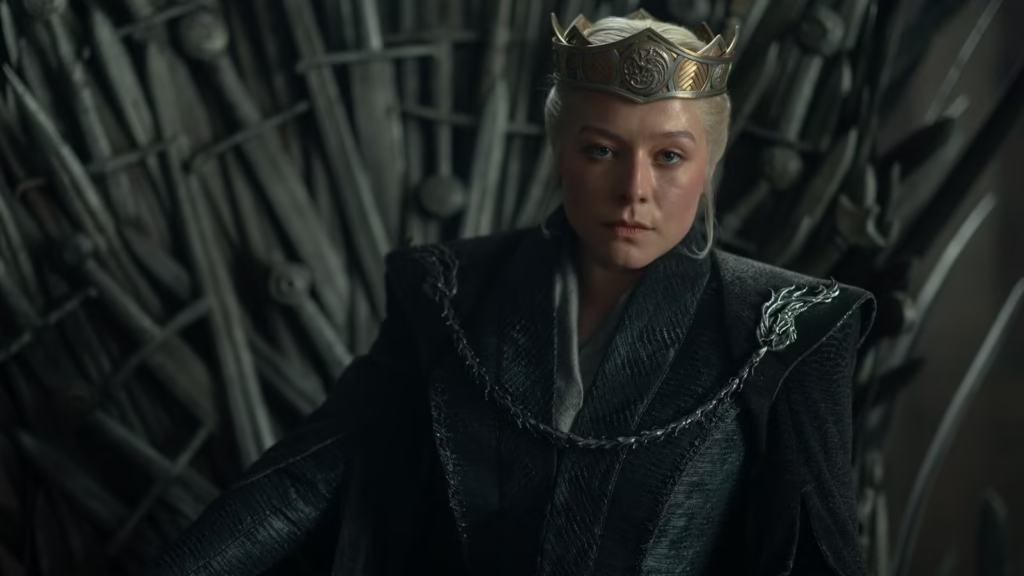
Season 3 picked up with Rhaenyra Targaryen finally claiming the Iron Throne after her brothers Aegon and Aemond fled King’s Landing. Episode 3 finds her discovering that ruling is a lot harder than sitting on a chair, especially with the royal treasury empty and a kingdom full of people who need her help right now. That struggle sets the stage for nearly every canon change in this episode.
1. Ormund Hightower’s Forced Surrender
The episode opens with Lord Ormund Hightower and his Reach army cornered by Prince Daemon Targaryen, his dragon Caraxes, and a group of dragonseeds. Facing certain incineration, Ormund has little choice but to pledge his loyalty to Rhaenyra on the spot. This kind of tense, dragon-backed negotiation isn’t something Fire & Blood spells out in this way, and it sets up the episode’s biggest invention.
2. The Fake Daeron Twist
Here’s where things get really interesting. Daemon demands that Ormund hand over Prince Daeron Targaryen — King Viserys’s youngest son, who’s been fostered at Oldtown — as a hostage. Ormund complies, but the boy handed over turns out to be a lowborn child in disguise, his hair bleached white and instructed to stay silent. The deception unravels once Alicent Hightower can’t hide her reaction to the fake “son” in front of Rhaenyra.
This plotline doesn’t exist in Fire & Blood at all. Instead, as several outlets have pointed out, it closely mirrors the long-running “Young Griff” fan theory from Martin’s other series, A Song of Ice and Fire — a theory so popular it’s practically treated as canon by readers, even though the books themselves have never confirmed it. Essentially, the show borrowed a twist from an entirely different, unfinished book series and repurposed it here, which is a genuinely unusual move for an adaptation.
3. Tyland Lannister Is Presumed Dead
Corlys Velaryon tells Rhaenyra that Tyland Lannister must be presumed dead after being dragged underwater by his own armor during the Battle of the Gullet. That’s a massive departure from the books. In Fire & Blood, Tyland survives, gets tortured and maimed by Rhaenyra’s regime, and later goes on to serve as Hand of the King under Rhaenyra’s son, Aegon III. Killing him off this early erases an entire arc — unless the show is planning a surprise return, since his body was never actually shown on screen.
4. Corlys and Rhaenyra’s Bastard Son Fallout
In the books, Corlys openly petitions for his illegitimate sons, Addam and Alyn of Hull, to be legitimized as Velaryons, and there’s no indication Rhaenyra ever pushed back on it. The show flips that dynamic entirely. When Corlys renews his request in this episode, Rhaenyra refuses, worried that legitimizing more bastards will fuel the same rumors that have followed her own children, Jace, Luke, and Joffrey, since birth. The resulting argument turns bitter fast, with Corlys throwing the word “bastards” back at Rhaenyra to intentionally wound her — especially painful given Jace’s recent death. It’s a compelling bit of drama, but it’s entirely invented for television.
5. Rhaenyra Leans On Alicent For Guidance
Now sitting on the Iron Throne, Rhaenyra repeatedly turns to Dowager Queen Alicent for advice, treating her like the resident expert on ruling. That’s a strange choice given the show has previously established that it was Alicent’s father, Otto Hightower, who actually ran the realm during the back half of King Viserys’s reign — not Alicent herself. This shift seems designed to deepen the Alicent-Rhaenyra relationship rather than reflect any real change in book canon.
6. Hugh’s Family Ties Complicate His Future Betrayal
The show gives the dragonseed Hugh a wife, Kat, and a family living in Tumbleton — details that don’t exist in Fire & Blood at all. In this episode, Hugh asks Rhaenyra to make good on her promise to look after them, and she agrees to bring Kat to King’s Landing once things settle down. The problem: in the books, Hugh eventually betrays Rhaenyra during the Battle of Tumbleton, using his dragon Vermithor to burn the city and its people. If his own family is living there when he turns, that betrayal becomes a lot harder to explain — and a lot more emotionally complicated than the source material ever intended.
7. Empty Coffers and a Delayed Coronation
Unlike in the book, where Rhaenyra’s early reign isn’t defined by financial crisis, the show has Tyland Lannister secretly hiding the royal gold, leaving Rhaenyra unable to fund a coronation or help the smallfolk begging at her gates. Her advisor Mysaria pushes her to prioritize the common people over ceremony, giving Rhaenyra’s storyline a populist, almost modern political angle that Fire & Blood — written as an in-world historical text — never really explores in this much personal detail.
Why Does House of the Dragon Keep Changing The Books?
This isn’t a new pattern. George R.R. Martin has been openly critical of these kinds of changes for several seasons now, warning on his own blog about a “butterfly effect” where small alterations snowball into dramatically different outcomes down the line, according to InBetweenDrafts. Showrunner Ryan Condal, meanwhile, has defended these choices as necessary for adapting a book that’s written as a dry historical chronicle rather than a character-driven narrative.
There’s actually a structural reason the show can get away with this more than most adaptations. Since Fire & Blood is presented as an in-universe history book, any discrepancy between the show and the source material can be chalked up to an unreliable narrator or incomplete historical record. That gives the writers a lot more creative wiggle room than a typical book-to-screen adaptation would have, as outlets covering the show’s earlier changes have noted, including Winter Is Coming.
How This Episode Fits Into Season 3’s Bigger Pattern
Episode 3 isn’t operating in a vacuum. Earlier in the season, the show already made one of its biggest changes yet by having Rhaena Targaryen — rather than the book’s Nettles — claim the wild dragon Sheepstealer, a swap that reshapes the entire back half of the war and removes one of Fire & Blood’s most thematically important characters altogether, as detailed by ComicBook.com. Once you factor that change in alongside everything happening in episode 3, it’s clear the back half of this season is on a very different track than the books, and the ripple effects are only going to compound from here.
Frequently Asked Questions
Does Tyland Lannister actually die in House of the Dragon season 3, episode 3?
He’s presumed dead after sinking underwater in heavy armor, but his body is never shown on screen, leaving the door open for a future return.
Is the fake Daeron plot based on the books?
No. It doesn’t appear in Fire & Blood at all, and instead closely resembles the unresolved “Young Griff” theory from Martin’s A Song of Ice and Fire novels.
Why is Rhaenyra’s storyline so different from the books in this episode?
The show adds an empty-treasury subplot, a legitimization fight with Corlys, and a reliance on Alicent for guidance — none of which appear in Fire & Blood, likely to give Rhaenyra more personal, dramatic conflict as queen.
Has George R.R. Martin commented on these changes?
Yes, he’s discussed his concerns about accumulating changes on his blog, though showrunner Ryan Condal has defended the creative liberties as necessary for adapting the source material.
When does House of the Dragon season 3 air new episodes?
New episodes release weekly on HBO and HBO Max in the US, with Sky and NOW carrying the show in the UK.
What To Watch For Next
With Tyland’s fate left ambiguous, Hugh’s family now living in the very city he’ll eventually burn, and Rhaenyra’s rift with Corlys still raw, episode 3 has planted several seeds that are likely to pay off — or blow up — before the season ends. If you’re trying to predict where the show goes from here, keep a close eye on Tumbleton and the Velaryon family drama specifically, since both threads now carry far more emotional weight than they did in the books.
Conclusion
House of the Dragon season 3, episode 3 delivers some of the most significant book deviations the series has attempted yet, from a stolen identity plot lifted out of an entirely different novel series to a presumed death that erases one of Fire & Blood’s longer-running arcs. Whether these changes ultimately pay off the way Rhaena’s Sheepstealer twist has so far remains to be seen, but one thing is clear: the further this show gets from its source material, the higher the stakes become for both die-hard readers and newcomers alike.